SA’s anti-immigration movement raises the stakes on social media
Vigilante videos, AI-generated content and Mandela-linked framing are fuelling millions of mentions and xenophobic sentiment.
Published on 23 July 2026 in
ISS Today
By
Karen Allen
ISS Consultant and former BBC foreign correspondent
With weekly anti-immigration protests planned by the March and March movement until South Africa’s 4 November local elections, supporters are broadening their tactics to sustain online engagement, including by using the Mandela name to legitimise their campaigns.
Vigilante-style content in which people are seen assaulting foreign nationals has been extensively shared on social media. In addition, several activists are invoking the Mandela name to position the anti-immigration or xenophobic debate as part of the freedom struggle championed by Nelson Mandela and Winnie Madikizela-Mandela.
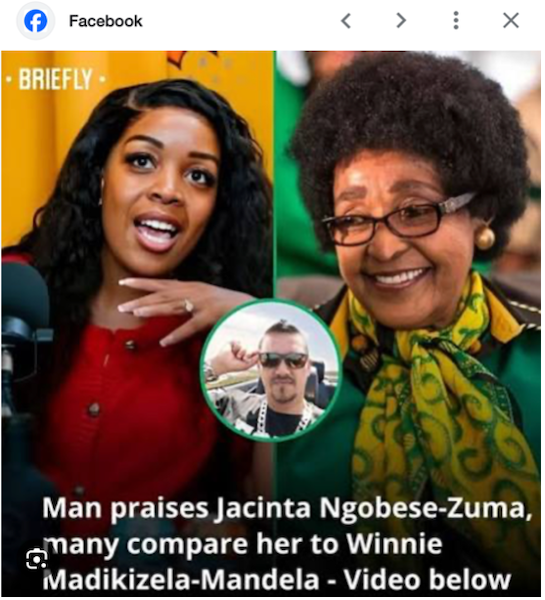
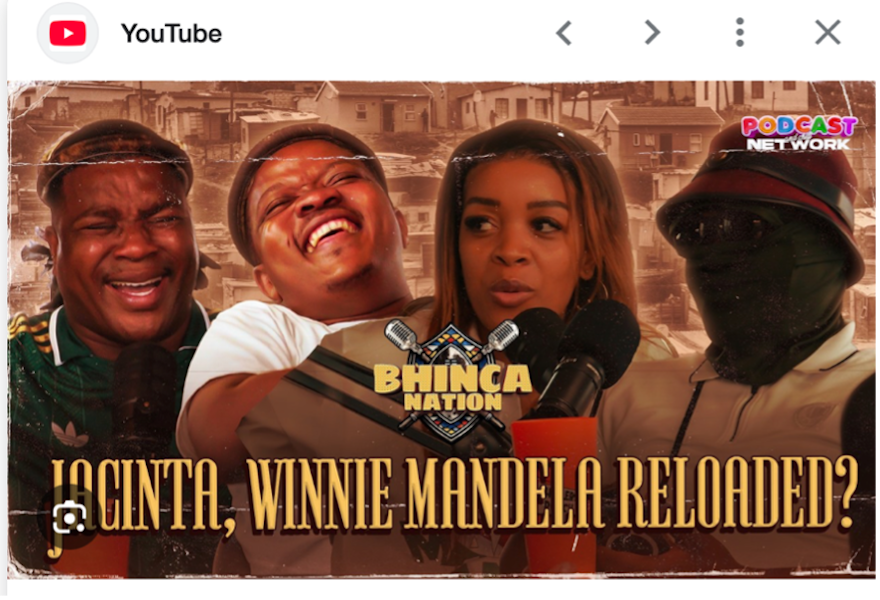
During a recent closed meeting of civil society media monitoring organisations and government aimed at tracking social media discourse ahead of elections, it was revealed that several social media posts portray March and March leader Jacinta Ngobese-Zuma as ‘the Winnie [Madikizela]-Mandela of our time.’
|
Social media posts linking Jacinta Ngobese-Zuma and Winnie Madikizela-Mandela
|
 |
 |
As Mandela Day approached on 18 July, some planned marches, including in the Eastern Cape, were framed as efforts to ‘clean’ Mandela’s home province – linking anti-immigration activism to the legacy of the liberation struggle, say monitors. Media reports confirmed 69 arrests as violence broke out in the province.
Ironically, in 2008 Madikizela-Mandela was among the first African National Congress National Executive Committee members to condemn xenophobic attacks in South Africa, while many of her comrades remained silent.
The latest protests elicited a stern statement from the Nelson Mandela and Desmond and Leah Tutu foundations, which condemned anti-foreigner violence and said the struggle was being misrepresented to legitimise campaigns.
They said the ‘dehumanisation of others, collective blame, intimidation, vigilantism or the targeting of vulnerable communities,’ are things that neither Mandela nor Tutu would accept. They urged South Africans to hold institutions and leaders accountable, rather than ‘directing anger towards entire communities on the basis of nationality, ethnicity or origin.’
Vigilante-style content showing people assaulting foreign nationals has been extensively shared on social media
But the reality is that alongside the targeting of individuals and communities where foreign nationals live, democratic institutions are being attacked and undermined – principally law enforcement.
Some anti-immigration leaders have positioned themselves as de facto police. One TikTok video declared ‘we are the police’ and in a Facebook post, Ngobese-Zuma urges supporters to ‘fetch the police and take them to drug dens and places where employers are hiring illegal immigrants.’
While there may be public frustration at police complicity and corruption, this arguably amounts to a call to action, which under South African common law and the Cybercrimes Act (2020) may be construed as incitement. Notably on 20 July, the trial began of the 62 people accused of inciting the July 2021 violence using WhatsApp groups.
Artificial intelligence (AI)-generated TikTok videos also depict the Insizwa Nobunsizwa anti-immigrant movement leader challenging a police officer trying to stop the harassment of foreigners. The provocative content is clearly AI-generated, but has been widely circulated.
While users may share some of these posts without malicious intent, social media amplification is pushing potentially harmful content to new heights. Monitors report that the anti-immigration campaign has gained momentum, with some 3.6 million mentions since January 2026. This reflects active user engagement, but the potential reach may run into billions.
The anti-immigrant campaign has gained online momentum, with some 3.6 million mentions since January 2026
There is also a strong correlation between online and offline worlds through amplified content about demonstrations, repatriation of foreign nationals, court rulings and vigilante violence. Some 15 Facebook and X accounts have boosted the conversation this year. During the 2024 national election campaign, online amplification was used to keep an issue in the public spotlight.
The Campaign on Digital Ethics (CODE) and the Campaign for Free Expression recently asked Facebook and X how they ‘identify and demonetise’ accounts posting anti-immigrant hate speech. (Negative content generates higher engagement and more advertising.) CODE’s Director Kavisha Pillay says they have ‘heard nothing’ from the platforms.
Meanwhile the South African Government Communication and Information System (GCIS) – elements of which seemingly resist calling the protests ‘xenophobic’ or ‘Afrophobic’ – say they have reached out to the platforms. A senior manager said they had asked for ‘confirmation that platforms are aware of violence and incitement in their feeds and if so what [they are] doing about it.’
It is unclear what has come from those engagements. There appear to have been just a ‘handful’ of takedown requests, including on YouTube, says William Bird, Head of MOXII – formerly Media Monitoring Africa.
Nevertheless, there are positive signs that some in government may be more willing to call out mis/disinformation when it appears. Over the 18 July weekend, posts claimed that Congolese boxer Roméo Katompa had been burnt alive in a xenophobic attack in South Africa. GCIS responded with a warning on social media about spreading ‘unverified information’ about the attack. (Katompa died in a house fire.)
Most social media platforms have scaled back rather than strengthened their content moderation
Other mis/disinformation instances are also causing confusion, including claims that jobs are being created for South Africans in supermarkets like Spar, as foreigners are being cleared out. Africa Check debunked the claim, and Spar distanced itself from the campaign.
There have also been instances of videos being taken out of context. Monitors verified that one suggesting a huge gathering in Limpopo was an anti-immigration protest was, in fact, a traditional cultural celebration.
While Bird said YouTube and TikTok had removed some content, he was ‘disappointed’ at X and Meta/Facebook’s lack of response. ‘My concern is that the threshold [for takedowns] is just not considered high enough [in South Africa].’ He cites the killing of the United States right-wing activist Charlie Kirk as an example of extreme content which forced platforms to respond.
Most social media platforms have scaled back rather than strengthened their content moderation. Bird explains that a trusted partner system enables complaints to be escalated in some platforms, but that internal resistance may hamper decisive responses.
Meanwhile, there are concerns of a backlash. On 15 July, two Ghanaian nationals petitioned the International Criminal Court to investigate xenophobic attacks and alleged crimes against humanity in South Africa.
Ultimately, the question is: who stands to gain from the chaos and unchecked vigilantism? Is it social media platforms, politicians ahead of elections, external actors like Russia, with longer-term ambitions to see an unstable South Africa – or a dangerous combination of all three?
For permission to re-publish ISS Today articles, please email us. In South Africa, News24 has exclusive rights to republish ISS Today articles. In Nigeria, Premium Times has exclusive rights to republish ISS Today articles.