In the troubled Karamoja Cluster, Lokiriama’s peace accord endures
The 1973 treaty empowers communities as the owners of the process and traditional elders as the guarantors of peace.
Published on 23 March 2026 in
ISS Today
By
Guyo Chepe Turi
Research Officer, East Africa Peace and Security Governance, ISS Nairobi
In 1973, elders of the Matheniko community in Uganda and Kenya’s Turkana County met under a tree in the dusty border town of Lokiriama to discuss peace. Two weeks later, the Lokiriama Peace Accord was concluded, ending decades of violent clashes between the two pastoralist groups.
Half a century after the guns, spears, bows and arrows were buried, this community-centred effort still underpins peace in the border area.
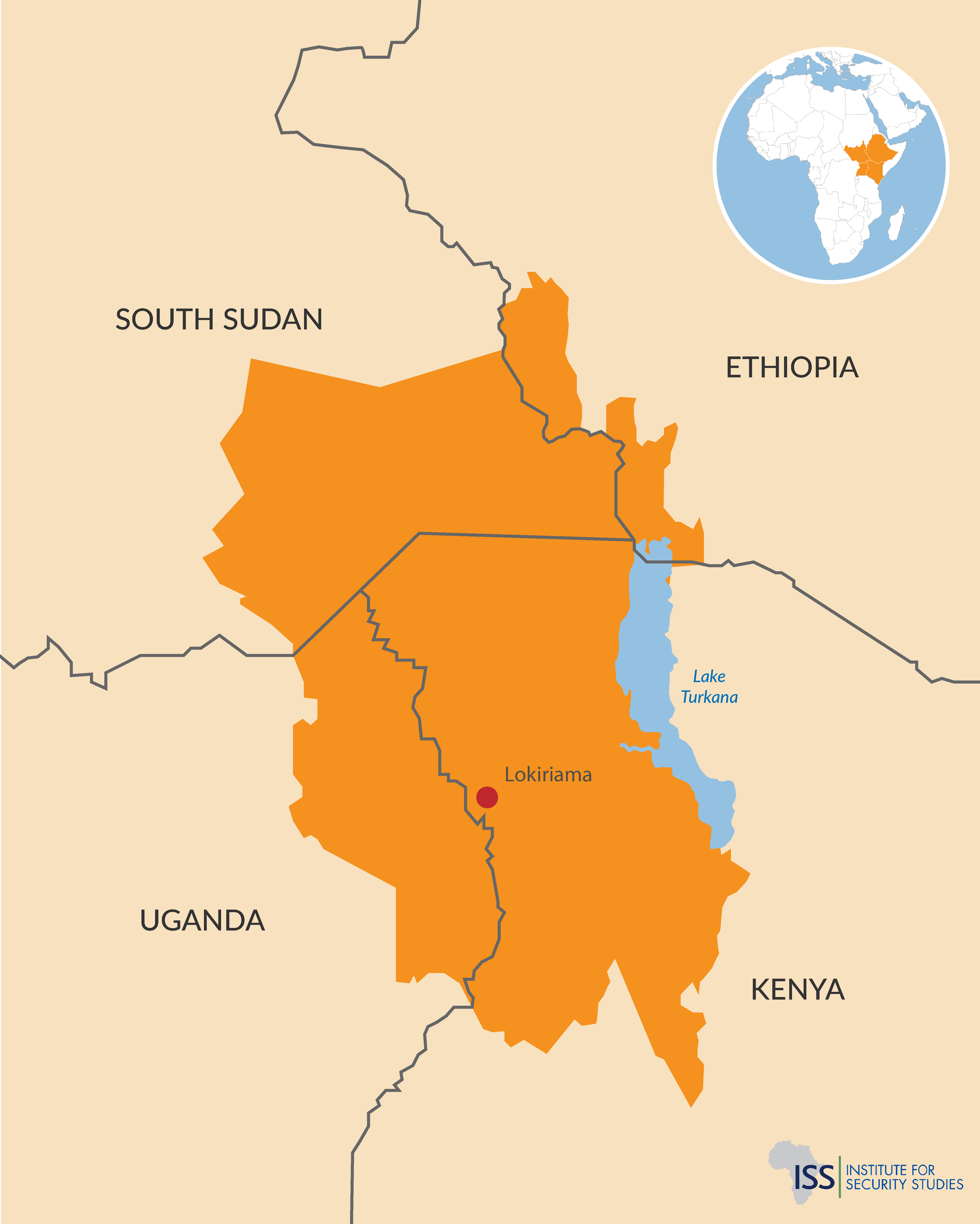
The agreement was initiated by the Matheniko, who had endured persistent deadly and destructive raids at the hands of Turkana warriors. The two communities live in the Karamoja Cluster on the borderlands of Kenya, Uganda, South Sudan and Ethiopia.
Poor rainfall and persistent drought in the harsh semi-arid landscape are worsened by climate change. These factors have led to increased competition over water and pasture, fuelling armed conflict among local communities. Economic marginalisation and the absence of basic infrastructure, coupled with easy access to guns, have made the Karamoja Cluster a theatre of armed conflict.
|
Lokiriama in the Karamoja Cluster
|
A Turkana elder told ISS Today that community elders are central to intercommunal peacebuilding. They establish rules for sharing pasture and water and sanction those who transgress.
They can also authorise raids and set the rules of war, such as the protection of the elderly, women and children during conflict. Elders are regarded as custodians of societal norms and institutions and have the power to negotiate peace and sanction war by blessing community fighters.
The elder said the peace deal was mainly influenced by historical kinship ties and past inter-communal interactions, with the understanding that neither group was seen as an enemy of the other. Communities believe that livestock raids are a ‘normal’ security challenge that can be resolved by convening elders for negotiations.
These traditional approaches to conflict resolution rely on a history of community relations as a platform for reconciliation. This knowledge provides an understanding that can help rebuild severed trust and lay a foundation for communal coexistence.
The groups believe that the need to preserve inter-communal bonds supersedes any challenges to peace
The groups believe that the need to preserve inter-communal bonds supersedes any challenges to peace. Such compromises are not possible in the modern court system, which relies on police and, at times, soldiers to enforce law and order.
In the Karamoja Cluster, military responses such as forceful disarmament have had limited success. They lead to periods of temporary calm – only for the conflict to erupt again at the slightest provocation. Disarmament exercises have also been largely uncoordinated between neighbouring countries, with communities crossing borders when security operations start, and returning once the operation is over.
Security force responses to distress calls are also slow, leaving people to fend for themselves. The use of military force to address lawlessness has largely contributed to greater insecurity and human rights violations, such as excessive use of force and the military trial of civilians, especially in Uganda.
The 1973 peace accord has survived turbulent periods, such as the fall of Idi Amin in Uganda in 1979, which led to a breakdown of law enforcement in the Karamoja Cluster. While raids among communities intensified during this time, Matheniko and Turkana remained true to the accord.
Forceful disarmament provides a temporary calm before conflict erupts again at the slightest provocation
The agreement continues to hold in a region where many other peace deals have failed – including the Angisa and Nabilatuk accords, which were seen as harsh and unrealistic.
Angisa, facilitated by local community leaders and government officials, was proposed in 2018 to curb cattle theft among Karamoja pastoralist communities. The Nabilatuk Agreement, signed in 2014 between the Matheniko, Pian and Jie communities, was facilitated by local community leaders with the support of government officials.
The 1973 treaty has withstood the test of time simply because it empowers communities as the owners of the peace process and traditional elders as the guarantors of peace.
A commemoration ceremony is held every year on 21 September to reaffirm both parties’ commitment and reflect on how to strengthen the accord. The event also brings together other communities in the Karamoja Cluster, including the Didinga and Toposa (South Sudan), Karamojong (Uganda), and Nyangatom (Ethiopia). The ceremony attracts senior government officials, civil servants and political leaders, especially from Kenya and Uganda.
Peace processes brought closer to the people in a cultural setting are more binding than boardroom outcomes
The Lokiriama Peace Accord shows that warring communities can coexist harmoniously by resolving conflicts within a cultural setting. The traditional approach to conflict resolution can deliver justice, peace and reconciliation through structured negotiations and mediation, with less emphasis on punishment.
It also shows the importance of communal ownership of peace processes, and how culture cements community relations while emphasising the complementarity of traditional institutions and government structures. The agreement affirms that a peace process brought closer to the people in a cultural setting is more binding than outcomes reached in the boardroom.
The Lokiriama example calls for policymakers and peace actors concerned with the Karamoja Cluster to strengthen traditional community-level institutions. Support should be provided to ensure they function effectively and complement modern conflict resolution approaches.
Context-specific, traditionally binding and culturally sensitive peacebuilding among pastoralist communities living in the Karamoja Cluster provides a roadmap to stability. Communities need time and space to engage openly and constructively in a structured conversation in the language they best understand.
For more, read the ISS policy brief ‘Kenya-Uganda Lokiriama Peace Accord: lessons from an unwritten agreement’ here.
For permission to re-publish ISS Today articles, please email us. In Nigeria, Premium Times has exclusive rights to republish ISS Today articles.