Insecurity is crippling economies on the Cameroon-Chad trade corridor
Terrorism, kidnapping and crumbling roads are combining to choke a trade lifeline linking Cameroon, Chad and Nigeria.
Published on 23 September 2026 in
ISS Today
By
Célestin Delanga
Research Officer, West Africa, the Sahel, the Lake Chad Basin and Central Africa, ISS
Remadji Hoinathy
Senior Researcher, West Africa, the Sahel, the Lake Chad Basin and Central Africa, ISS
Kidnappings, assassinations and other attacks have surged over the past year along Cameroon’s national highway linking the capital Yaoundé in the south to Kousséri, the northern border town with Chad. Boko Haram factions target passengers and freight trucks almost daily, despite the heavy military presence along this vital regional trade route. As the 2026 rainy season sets in, already-poor road conditions further threaten travel and commerce.
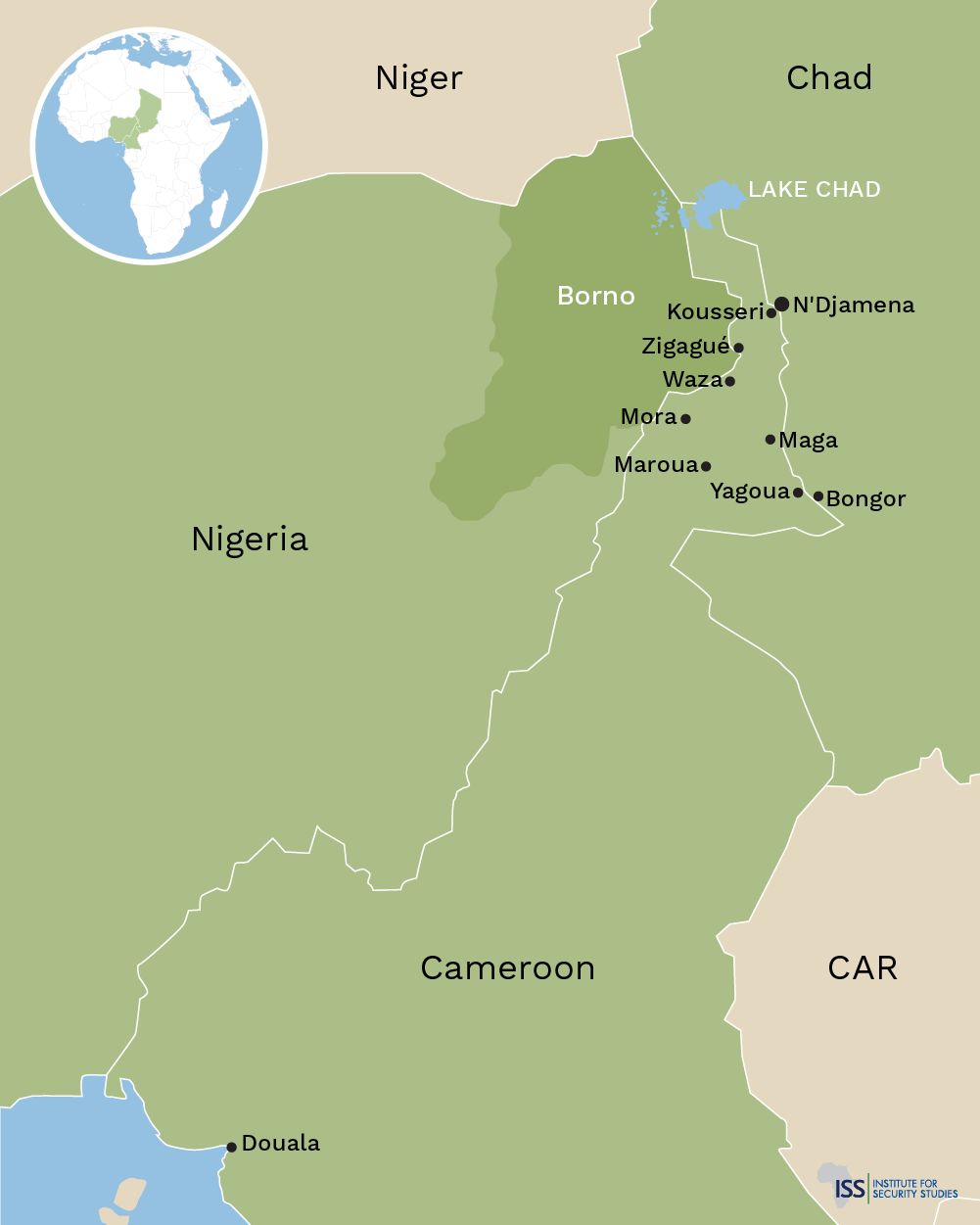
The Maroua-Kousséri-N’Djamena corridor serves as a lifeline for landlocked Chad, Nigerian exporters and Cameroonian communities living along this stretch of road. Cameroon’s Douala port is vital for Chad’s supply lines, with trade between the two countries dependent on goods moving from the port to N’Djamena. Extensive formal trade flows combine with a massive informal sector valued at over CFA 174 billion (US$303 million) for Cameroon, dominated by foodstuffs and livestock.
|
Key towns for trade and commerce in the Nigeria-Cameroon-Chad border area
|
Insecurity has intensified and become more complex along this route for three main reasons.
The first is collaboration between criminals and terrorists in kidnapping and human trafficking, fuelled by an influx of weapons and ammunition in the region. Opportunists collude with Boko Haram factions and pass on information about potential targets for this lucrative crime.
For instance, on 14 August 2025, suspected Boko Haram fighters abducted 11 coach passengers near Zigagué on the Maroua-Kousséri route. They were freed a week later following a Cameroonian military incursion into Nigeria and the arrest of local accomplices.
Interviews with former hostages and ex-fighters reveal that in the Mora-Waza area, groups of armed bandits, blending in with the local community, kidnap people and sell them on to the Jama’atu Ahlis-Sunna Lidda’Awati Wal-Jihad (JAS) Boko Haram faction. JAS then demands ransom from the victims’ relatives. This suggests a shift from kidnapping to human trafficking, a more complex activity involving both criminals and terrorists.
The second reason for growing security threats is renewed insurgency. Since January 2025, several high-profile attacks by the Islamic State West Africa Province on military posts along the national highway have caused heavy material and human losses for Cameroon’s army. These setbacks created opportunities for kidnapping and banditry to expand.
Traders are forced to use longer, more costly routes that can damage vehicles and delay deliveries
Third is poor road conditions, especially during the June-October rainy season. This facilitates ambushes because travellers can sometimes spend days traversing distances of less than 300 km.
Beyond worsening security, regional economic problems are directly impacting Cameroon, Chad and Nigeria. Reduced cross-border trade represents a huge loss for national economies, as travellers, traders and transporters are forced to use longer, more costly routes that can damage vehicles and delay the timely delivery of goods. Supply chain disruptions cause shortages of basic goods, soaring prices and the doubling of transport fares.
Harassment by police, gendarmerie or customs agents adds to the burden. For example, on a 7 km bypass route between Yagoua (Cameroon) and Bongor (Chad), 17 checkpoints were counted. After protests by carriers and road users, Chadian authorities reduced the number of checkpoints on their side of the border in May. In Cameroon, truck drivers allege there are more checkpoints on the road passing through Maga than on the entire national highway.
Efforts to rehabilitate the Mora-Kousséri section of the highway are commendable, but security remains a concern. The route lies close to Nigeria’s Borno State, the epicentre of the Boko Haram insurgency. While the Cameroonian side is dotted with villages all the way to Kousséri, Nigeria’s section is a vast uninhabited area serving as a refuge for Boko Haram and armed bandit groups.
Poor road conditions mean travellers can sometimes spend days traversing distances of less than 300 km
Beyond a defensive military presence along the trade corridor, joint offensive operations (both air and ground) between Cameroon and Nigeria are necessary. Civil-military awareness-raising initiatives could also reduce the infiltration of perpetrators into communities. All of this could form part of the military cooperation agreement signed by the two countries on 16 June 2026 in Yaoundé.
Furthermore, construction of the 280 km Maga-Kousséri road embankment announced in 2013 would allow traffic to bypass the site of Boko Haram’s attacks. If these road links proved viable, they would reduce the risks and provide economic opportunities for the surrounding communities.
For the time being, governments of the affected countries should alleviate the difficulties encountered on alternative routes, particularly through Chad, starting with reducing checkpoints and roadside harassment.
For permission to re-publish ISS Today articles, please email us. In South Africa, News24 has exclusive rights to republish ISS Today articles. In Nigeria, Premium Times has exclusive rights to republish ISS Today articles.